

COVID-19 Testing Clinic in Palm Bay, FL
Restore Health Urgent Care provides prompt, walk-in COVID-19 rapid antigen testing and medical evaluations for patients in Palm Bay, FL, and surrounding Brevard County communities. Respiratory illnesses such as COVID-19, influenza, and common viral infections often share overlapping symptoms including fever, cough, sore throat, congestion, and body aches. Our team offers same-day evaluation, reliable in-office testing, and tailored treatment plans to help you recover quickly and protect your family and coworkers. For more information, contact us or schedule an appointment online. We are conveniently located at 1840 Eldron Blvd SE. Suite 1 Palm Bay, FL 32909.
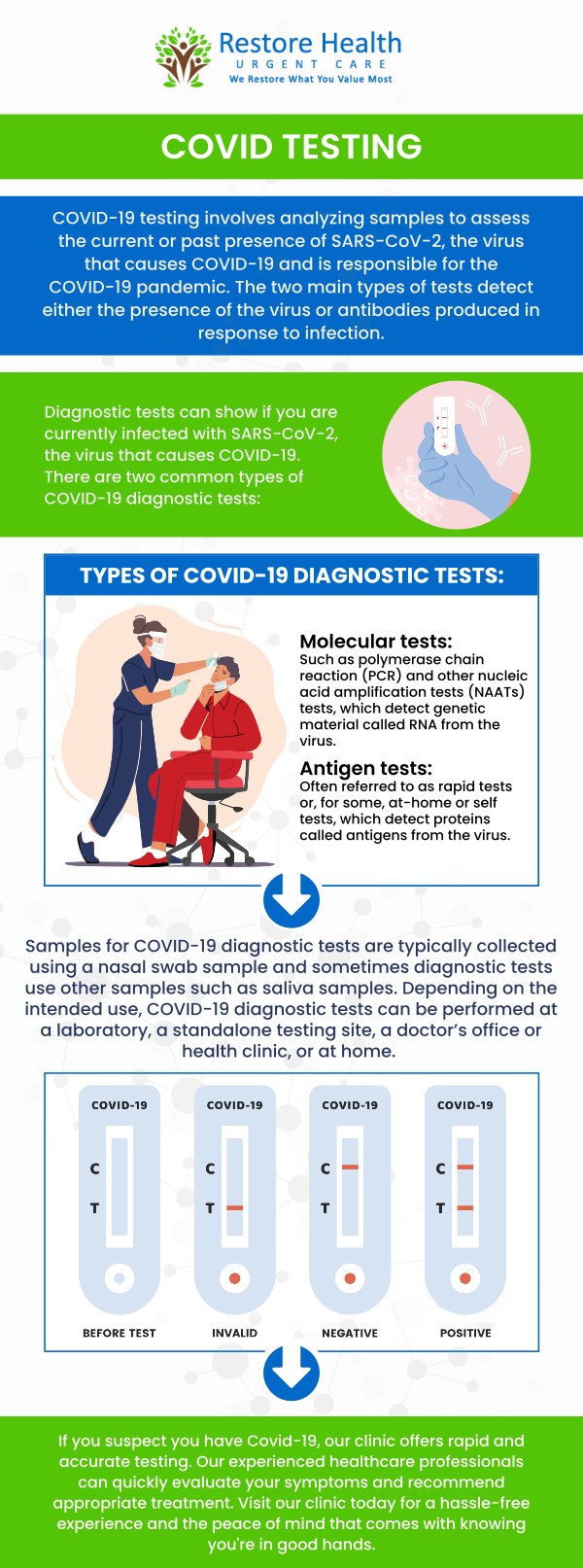
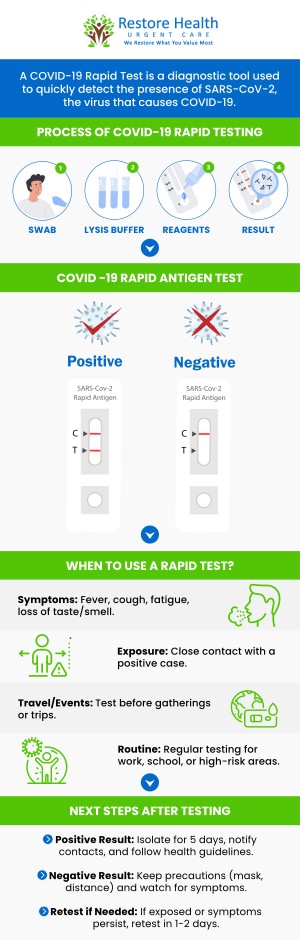
Table of Contents:
What are the most common symptoms of COVID-19?
When should someone consider getting tested for COVID-19?
How soon after COVID-19 symptoms begin should testing be done?
When should someone test after being exposed to COVID-19?
What is the difference between an antigen test and a molecular COVID-19 test?
Does a negative rapid COVID-19 test mean I definitely do not have COVID-19?
What should someone do if they have COVID-19 symptoms?
Is the old five-day COVID-19 isolation rule still used?
Can someone still spread COVID-19 after feeling better?
What happens if a fever or symptoms return after going back to normal activities?
How can someone reduce the chance of giving COVID-19 to family members?
Who is more likely to become seriously ill from COVID-19?
Are treatments still available for COVID-19?
Why is early medical evaluation important for high-risk patients?
Can COVID-19 be distinguished from the flu or a common cold by symptoms alone?
Can children get COVID-19?
What COVID-19 vaccine recommendations apply?
Do people who have already had COVID-19 still need to consider vaccination?
When should COVID-19 symptoms be treated as an emergency?
What can someone expect when seeking COVID-19 testing at Restore Health Urgent Care?
Medical References
COVID-19 symptoms can look very similar to the flu, a cold, and other respiratory infections. Common symptoms include fever or chills, cough, sore throat, congestion or a runny nose, fatigue, headache, muscle or body aches, nausea, vomiting, diarrhea, and shortness of breath. Some people may also experience a new loss of taste or smell.
Symptoms can vary from one infection to another and may be influenced by the circulating variant, a person’s vaccination history, age, and overall health. Symptoms alone usually cannot confirm whether someone has COVID-19, which is why testing may be useful when the cause of an illness is uncertain.
Testing is especially useful when a person develops symptoms that could be caused by COVID-19. Someone who has recently been exposed to the virus may also consider testing even if they feel well.
Testing can have added importance for older adults, people with weakened immune systems, and people with medical conditions that increase their risk of severe illness.
For these patients, confirming COVID-19 early may help avoid delays in discussing antiviral treatment, which has to be started within a limited period after symptoms begin. Testing may also be useful before close contact with a person who is at higher risk of serious respiratory illness.
A person with symptoms can generally test as soon as symptoms begin. An antigen test can provide a quick answer, but an early negative antigen result does not always mean COVID-19 is absent. Antigen tests are less sensitive than molecular tests and may miss infections when the amount of virus in the sample is still low. The FDA therefore recommends repeat testing after a negative antigen test.
People at increased risk of severe COVID-19 should avoid delaying medical evaluation while repeatedly testing at home. COVID-19 treatments work best when started early, and some must begin within five days of symptom onset.
Testing immediately after an exposure can be too early to detect an infection. FDA guidance for at-home antigen testing advises people without symptoms who have been exposed to wait at least five full days after the exposure before testing.
If symptoms develop sooner, testing can be performed when the symptoms begin. A single negative antigen result does not completely rule out infection. People without symptoms should follow the repeat-testing instructions provided with their FDA-authorized test. The FDA generally recommends three antigen tests over five days for people without symptoms, with approximately 48 hours between tests.
Antigen tests look for proteins from SARS-CoV-2, the virus that causes COVID-19. They can provide results quickly and can be useful when deciding what precautions to take. Molecular tests, including nucleic acid amplification tests such as PCR, detect genetic material from the virus. They are generally more sensitive than antigen tests.
Because antigen tests can miss an infection early in its course, a negative antigen test may need to be repeated. A healthcare professional may also recommend a molecular test depending on symptoms, risk factors, previous results, and the reason for testing.
No. A negative antigen test means the test did not detect enough viral antigen in the sample to produce a positive result. It does not completely rule out COVID-19. False-negative results are more likely early in an infection, when the amount of virus may still be too low for an antigen test to detect.
The FDA recommends repeating an antigen test about 48 hours after a negative result. People with symptoms should generally complete at least two tests over three days. People without symptoms should generally complete at least three tests over five days, following the specific instructions that accompany their test.
Current CDC guidance focuses on symptoms rather than requiring every person to follow a fixed number of isolation days. People with respiratory-virus symptoms should stay home and away from others while they are sick.
Normal activities can generally resume when symptoms have been improving overall for at least 24 hours and, if fever was present, the person has been fever-free for at least 24 hours without fever-reducing medication. After returning to normal activities, CDC recommends taking additional precautions for the next five days because some people may still be contagious.
CDC’s current general respiratory-virus guidance no longer tells everyone with COVID-19 to isolate for exactly five days. Instead, people who are sick should stay home until their symptoms have been improving overall for at least 24 hours and any fever has been gone for at least 24 hours without fever-reducing medicine.
During the next five days, additional precautions can reduce the chance of spreading infection. These may include wearing a well-fitting mask, improving indoor air, maintaining distance when practical, practicing good hygiene, and using testing when it may help guide decisions around other people.
Yes. A person can sometimes continue spreading the virus even after symptoms begin improving. There is no single day when every person with COVID-19 suddenly becomes noncontagious. The duration can differ according to the person’s illness, immune system, and other factors.
That is why CDC recommends extra precautions for five days after a person resumes normal activities. Wearing a well-fitting mask, improving ventilation, distancing from people at high risk, and considering testing before close contact can provide additional protection during this period. People who are immunocompromised may remain infectious for longer.
Someone who develops a new fever or begins feeling worse again after returning to normal activities should stay home and away from others. The person can generally resume usual activities again after symptoms are improving overall for at least 24 hours and the fever has been gone for 24 hours without fever-reducing medication. CDC advises beginning another five-day period of added precautions after returning.
Worsening symptoms can sometimes indicate that an illness needs medical evaluation, particularly when breathing problems, dehydration, chest discomfort, persistent fever, or other concerning symptoms develop.
Several layers of protection can help when someone in a household has COVID-19 or another respiratory infection. The sick person should stay away from others while symptoms are active and not yet improving. Cleaner indoor air can help, including opening windows when practical or using appropriate air filtration. A well-fitting mask can reduce exposure during necessary close contact.
Good hand hygiene and covering coughs and sneezes remain useful. Once the sick person returns to normal activities, taking added precautions for another five days is particularly important when household members are older or otherwise at increased risk for severe illness.
Anyone can become seriously ill, but risk is not equal for everyone. Age remains one of the strongest risk factors, with the chance of severe outcomes increasing substantially among older adults, especially those over age 65.
Certain chronic medical conditions and weakened immune systems can also increase risk. People with risk factors should seek medical advice promptly when COVID-19 symptoms develop rather than waiting for the illness to become severe. Early evaluation matters because antiviral medications must be started within a limited time after symptoms begin to provide their intended benefit.
Yes. Prescription antiviral treatments remain available for certain patients with mild or moderate COVID-19 who are at higher risk of progressing to severe disease. Treatment must begin early. Depending on the medication, treatment generally needs to start within five to seven days after symptoms first appear.
Antiviral medications do not have an unlimited treatment window. Waiting until symptoms become severe may mean that the recommended period for starting outpatient antiviral treatment has already passed.
CDC advises clinicians to consider treatment in patients with mild or moderate COVID-19 who have one or more risk factors for severe illness.
Some treatments must begin within five days, while another commonly used option must begin within seven days of symptom onset. For this reason, older adults and people with significant medical risk factors should contact a healthcare professional soon after COVID-19 symptoms begin, even when the illness initially feels mild.
Not reliably. COVID-19, influenza, RSV, and other respiratory viruses can produce many of the same symptoms, including fever, cough, congestion, sore throat, headache, body aches, and fatigue. A person’s symptoms and medical history can help guide an evaluation, but they may not identify the exact virus responsible.
Testing may therefore be helpful when knowing the cause could affect treatment, precautions, or decisions about contact with people at higher risk. This is particularly important because antiviral treatment options and treatment windows differ among respiratory infections.
Yes. Children can develop COVID-19, although the severity and symptoms vary from child to child. Parents and caregivers should watch not only for fever and cough but also for breathing difficulty, dehydration, unusual sleepiness, or a child who is becoming significantly worse.
CDC advises urgent medical attention for warning signs such as fast or difficult breathing, bluish lips or face, ribs pulling in with each breath, seizures, severe dehydration, or inability to remain alert. A fever of 100.4°F or higher in an infant younger than 12 weeks also requires prompt medical evaluation.
CDC’s current guidance recommends a COVID-19 vaccine for adults age 18 and older. For children ages 6 months through 17 years, the vaccine is recommended for those who are moderately or severely immunocompromised.
For other children in this age range, vaccination is recommended through shared clinical decision-making between a parent or guardian and a healthcare professional. The appropriate vaccine and number of doses can depend on a person’s age, previous vaccination history, and immune status.
Yes. A previous COVID-19 infection does not automatically replace current vaccination recommendations.
Immunity after infection can decrease over time, just as vaccine protection can. CDC states that the updated vaccines are intended to provide protection against currently circulating strains.
For adults, CDC recommends a COVID-19 vaccine even for people who have previously had COVID-19. Timing after a recent infection and individual circumstances can be discussed with a healthcare professional.
Emergency warning signs include trouble breathing, persistent pain or pressure in the chest, new confusion, or an inability to wake or remain awake. Depending on skin tone, the lips, nail beds, or skin may also appear pale, gray, or blue.
These symptoms require emergency evaluation rather than a routine urgent care visit. Call 911 or seek emergency medical care. Other severe or rapidly worsening symptoms can also require emergency attention even if they are not specifically listed above. Restore Health Urgent Care’s website likewise directs people experiencing life-threatening emergencies to call 911.
Can an at-home COVID-19 test miss an infection?
Yes. Antigen tests can produce false-negative results, especially early in an infection, so repeat testing may be needed.
Can I have COVID-19 without a fever?
Yes. COVID-19 can cause many combinations of symptoms, and not everyone develops a fever.
Should I automatically isolate for five days after a positive COVID-19 test?
Not under current general CDC respiratory-virus guidance. Recommendations now focus on symptom improvement, fever status, and added precautions afterward.
Restore Health Urgent Care currently identifies COVID-19 testing and COVID-19 antigen testing as available services at its Palm Bay clinic. We also offer laboratory testing and care for common illnesses, including cold and flu symptoms.
A healthcare visit may involve reviewing symptoms, when they began, possible exposures, relevant medical conditions, medications, and previous test results. The appropriate testing or evaluation depends on the individual situation. Patients who are older or have medical risk factors should mention these concerns promptly because treatment decisions for COVID-19 can be time-sensitive. For more information, contact us or schedule an appointment online. We are conveniently located at 1840 Eldron Blvd SE. Suite 1 Palm Bay, FL 32909. We serve patients from Palm Bay FL, Melbourne FL, Malabar FL, June Park FL, Grant-Valkaria FL, and surrounding areas. Walk-ins Welcome.
Check Out Our 5 Star Reviews

Additional Services You May Need


 Send Text
 How May I Help You?